Do Groupon Like a Marketing Pro

Groupon can do wonders for your business if you do it right. Here is how you can do a daily deal special like a marketing pro and see some profit in the long run.

Step 1: Do you need to do a Groupon?

If you already have a ton of customers and can’t handle anymore. Don’t do a Groupon. Do a Groupon if you need more customers.

Step 2: Remind yourself why you are doing this

You are doing this to get repeat new customers. Repeat new customers will help you grow your business. The way you get repeat customers is by providing a great product and amazing service.

Step 3: Ask All Your Employees

Ask yourself and the people you work with if they are ready to handle a ton of new customers. Give them a warning that the next few weeks will require a little extra work from their end and you appreciate it. This is important because you don’t want your employees to treat the customer like crap and have your online reviews go down. See the graphic below:

Step 4: Cap the Amount You Sell

Only allow a certain amount of Groupons to be sold. The Daily Deal sales guy will try to make you do an unlimited amount but that is what he is trained to do. Cap the amount you can handle. My suggestion is figure out the number of new customers you can handle in a 14 day period and double that.

If you make your cap amount to be unlimited, you and your team will be overwhelmed and won’t be able to provide great service devaluing your business reputation. Worst of all this will drive business away in the long run.

If Groupon pushes you to sell more than you should go to another daily deal competitor like LivingSocial, JuiceInThecity, or the hundreds of other competitors.

Step 5: Train Your Employees to Upsell and Be Nice

A. Treat daily deal members really nicely. They are customers you NEED to come in again.
B. At the end of your service with the customer. Ask if they have had a positive experience and to do you a personal favor and review your service on Google Maps, Yelp, or Foursquare.

* Almost all new restaurants I checkout are through Yelp and Google Maps. You can really get a ton of positive reviews with a Daily Deal burst and this can help you find new customers in the long term.

C. Remind the customer that you are a small business just getting things off the ground, so if they have any friends or family that would be interested in your service you would be happy to offer them a 10% discount.

I also encourage sending a personal “Thank You” email at night with a direct link to your business on Yelp and Google Maps.

Step 6: Stay Organized and Force Repetition with Email Addresses

Add all the email addresses from the daily deal into a email newsletter service like mailchimp or iContact. Send out monthly updates with a coupon (something small like $1 off or free 15 minute consultation). Remind the customer that you still exist and greatly value their business. One service I’ve seen people use and like is MobManager to help keep their daily deal customers organized.

50% of your users will unsubscribe from your newsletters, be okay with that and keep plugging away.

Step 7: Enjoy Your New Repeat Customers

Congrats on the new business you deserved it!

Are there any steps that I missed or things that could greatly help a positive outcome for businesses doing a Daily Deal special? Please, let me know in the comments.

Subscriptions vs. Advertising – “Reddit Gold” Success

reddit gold

Exactly one year ago Reddit launched a subscription revenue stream called “Reddit Gold”. You can pay $3.99/mo for extra features and a special trophy next to your username.

Some Background

Reddit is a thriving community site where users can vote up (and vote down) news articles, images, and videos. The homepage consists of the top links found around the web that is changing constantly based on users votes.

Reddit was struggling a year ago

They were one of the biggest sites on the internet (top 500) and they weren’t able to keep their site up – they needed cash for servers and engineering talent badly!

Reddit Gold was Born

Instead of blasting their users with take-over advertisements they charged their community money (a la Reddit Gold) for extra perks on the site! This turned out to be a major success by bringing in much needed cash.

Here is a great quote from one of the Reddit team members:

Today we know that the reddit gold program turned out to be a huge success. We used the cash infusion to buy a raft of new servers, which (by great, dumb luck) came online just in time for the Digg implosion. The new capacity allowed us to ride this tidal wave instead of getting crushed by it. – Raldi

Checkout their explanation of why you should subscribe to Reddit Gold:

What do I get for joining?
We plan to continually add features over time. Right now we’re offering:

  • A trophy on your userpage
  • The ability to turn off sidebar ads, sponsored links, both, or neither
  • The option of seeing twice as many comments at once without having to click “load more comments”
  • New comment highlighting: see what’s been posted since the last time you visited a thread
  • Friends with Benefits™ — you can add notes to your friends to help you keep track of them all
  • Access to a super-secret members-only community that may or may not exist
  • A thank-you note

Notice how it’s nothing fancy just a few extra feature additions.

Proof: Don’t Be Afraid to Charge

If your users love your site, a very small fraction of them will pay you and it might turn out to be much more significant than your advertising revenue.

What do you think of this move? Do you know of any community based sites that should launch a subscription option? Please let me know in the comments below.

Learn from Google+. Copy First, Innovate Second

Instead of reinventing social networking from the ground up, Google+ just copied the best qualities of all the other popular social networks, which is why it’s so amazing and gaining traction so quickly.

Here are some things that I’ve noticed they copied:

Facebook’s Layout

Everyone is used to Facebook’s layout. So why not lower the learning barrier by making the user interface the same?

Facebook’s Likes

Google noticed that users really loved Facebook’s “Like” feature. Leaving a comment is a lot of work but allowing people to easily give you feedback with a click of a button incentivizes more status updates. Google copied the “Like” with a “+1” which functions identically.

Twitter’s Retweeting and Tumblr’s Reblogging 

Who doesn’t love a reblog or a retweet? Google made it super simple to share your friends status messages with your followers.

Twitter Followers 

It’s pretty cool when you can get an inside look at what your favorite American Idol is having for breakfast. Google makes following a possibility (something you can’t do on Faceb00k). This allows a one-to-many relationship and opens up the amount of connections you can have.

Quora’s Notifications

All top social networks (Quora, LinkedIn, Facebook) do whatever it takes to show you notifications. Google went to the extreme on this. You get updates at the top bar of all Google properties (Google.com, Google Reader, Gmail, etc) if you are signed in, and they also email you updates.

Color’s Nearby Tab

Google knew that early on peoples newsfeed would be pretty empty since most people would have less than 10 connections when starting out. So they adopted Color’s idea, which is to show you what people near you are posting. This allows you to feel an instant sense of community and engages you right away.

I’m not bashing Google here by any means. I love Google+ and I think they made a smart move by just going with what already works. Once they reach their 25M+ users next week, like PC Magazine predicts, then they can innovate like crazy and change the world.

Update: Awesome comment on Hacker News to this post:

I want to point out that so many companies get the “copy first” part right, but never get around to the “innovate later” part. Copy first is becomming a mantra. Facebook was a copy of The Face Book, in fact. The reason facebook is what it is is that they did get around to innovating later. The reason there’s no competition for the iPod is that the competition never got around to innovating (or in MSFT’s case, got around to it way too late.) – econgeeker

The $10k Kitchen Computer that never sold (not even a single unit!)

Neiman Marcus launched The Kitchen Computer in 1969. This was a time when personal computing was still a far-fetched vision. The Kitchen Computer helped you create the perfect menu for any dinner. The total cost was $10,000 and you needed to enter in the recipes manually in binary (1’s and 0’s).

Unsurprisingly, Neiman Marcus didn’t sell a single Kitchen Computer. $10,000 could buy you a house at that time and who wanted to enter in binary code by hand?

The 1969 [Neiman Marcus] Christmas Catalog featured the Kitchen Computer. For $10,600 you got the computer, a cookbook, an apron, and a two-week programming course.

Despite the lack of sales this was a smashing success for Neiman Marcus! It was talked about in magazines and brought up in many many conversations. Neiman Marcus knew this going in. Their goal was to be known as a cutting edge brand and this showed it. This was a product invented purely for marketing and nothing else.

Do you know any products that were launched purely for branding? Let me know in the comments.

Video – Sound Amazing Online

Last night I did an 5 minute talk at Ignite about sound amazing online and it was awesome! The video and slides are embedded below.

Here is what people are saying about it:

“Rishi is killing it, the crowd is cracking up #ignitesf“
– Jon Bishop (Ignite Organizer) via twitter

“marketing wisdom and laughter in 5 min”
– Raymond Lau (Founder of PlayHaven) via LinkedIn

“R rated joke at 2:22 – I hope mom doesn’t see this.”
– Anand Desai (my brother) via Facebook


This was my favorite and probably most sarcastic comment:
“your speech was the best five minutes of my life.”
– Jamie Shah (Google Maps Finance High Roller) via Facebook

So, what did you think of the speech? Let me know in the comments.


2011 SEO Ranking Factors

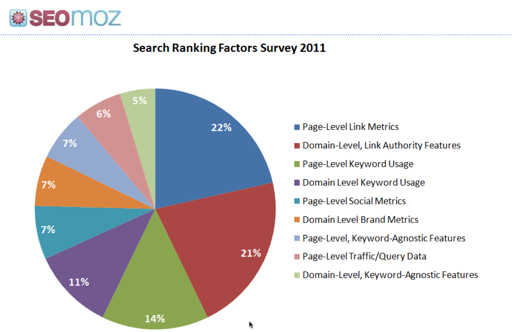
I had the honor to hear Rand Fishkin present the 2011 SEO ranking factors. This was probably the best presentation on SEO I have even been to and I just had to share the 4 things that I thought were amazing to learn!

130 top SEO gurus got together and filled out in depth surveys to figure out what helps you rank on Google. Rand and the SEOmoz data scientist built models and backed their findings. He did want everyone to understand that all of these findings could simply be correlations and not the root cause.

Here were my key takeaways:

#1 Getting Links is still a big part of it.

Nothing out of the ordinary here. The more people linking to you the better.

But the percentage of how much a pointing link actually matters overall dropped from 2009. In 2009 it was 67% and now it is 43%. Other factores are starting to matter more now.

2011 Search Ranking Factors

#2 No follows count.

Google likes it when you comment, tweet, and have profiles across the web. It shows that you are a human and will help your links rank higher. So don’t just get people to link to your blog. Comment and contribute to other peoples blogs and social profiles.

#3 Short URLs

The norm has been the more keywords you can stuff in your URL the better. This isn’t the case based on the data Rand presented. Google does like clean URLs but try to make them short when possible.

#4 Get authority figures to tweet your link

If you can get real people to tweet about you it alerts google that you have an important link. It also helps if you can get a twitter use with authority to tweet your link (a verified account or someone with a lot of followers)

A shortened version of the presentation I saw is available online here and the complete data set finding is available here.

Did any of 4 items that I listed above surprise you?

The World’s Greatest Up-Sell: Facebook Pages

Facebook is getting really good at making money. They do a great job up-selling their ads with Facebook pages. I want to reveal their strategy in hopes you can do the same to your business.

Step 1: Create a Facebook Page without even knowing it

They promote the ability to create a Facebook page in lots of interesting ways. My favorite one is on user profiles. Facebook asks you to enter in where you work and automatically creates it into a Facebook Business Page that other users can “Like”. This will prompt the business owner to have lots of “Likes” before their page is even started.

Works at Flying Cart - Facebook Page

Step 2: Invite all your friends so you can actually name it.

They prompt you to invite all your friends. They actually don’t let you name your page until you have received at least 25 likes. This gets you to start obsessing over the # of likes you have.

Facebook Pages - Invite Your Friends

Step 3: Sell ads to get more “Likes”

When you are on your own Facebook Page they show you what your advertisement could look like with a call-to-action button that says “Get More Likes”

Sample Ad for a Facebook Page to get you to start advertising

Step 4: Keep the “Like” obsession going with analytics

They email you weekly insights on how many fans you have and get you really worried if the numbers are going up or down. At the bottom of the email they have a convenient link to promote your Facebook page with ads.

In summary what Facebook has done is pretty brilliant. They have other users collecting “Likes” for your business before it even launches. They then get you obsessed with the number of likes you have. Then they up-sell you ads to get more likes.

This is an old strategy that works

This strategy has been around for years. My first recollection of this is Yellow Pages. They list your business in their directory for free. You either learn about their service from a client that told you they found you through Yellow Pages or you were also an end consumer yourself. Once things get rolling they ask you to “upgrade” your profile by bolding your name or placing an advertisement in their book.

Yelp follows this model as well. They list every business possible  for free and up sell ads.

Google probably takes the cake on this. They crawl the entire web. Give you Google Analytics so you know that customers are coming from Google. They then upsell you ads so you can get more people to your website through them.

In conclusion, if you run a business that has massive amounts of use, consider doing some soft upsells like Facebook.

Launch a Business, Not a Bunch of Social Media Accounts

Launching a new product on the web can be an extremely daunting task. You have to create a new Twitter account, collect email addresses, write on a blog, start a Facebook page, go to conferences, and so on.

My question to you is will any of these things actually get you new customers? Chances are they won’t.

Don’t launch your company Twitter account until you are ready. It is a huge mental drain to get yourself to update it everyday.

Don’t start a blog until you are ready to post to it every few weeks with updates. No one is going to read your blog until you have a few customers or some publicity. It is major time-waster to have to update a blog after it has been launched. Instead focus on reaching out to existing industry specific blogs and writing on those.

Don’t start a Facebook page. In most cases all your Facebook likes will be the friends you spam. Wait to launch a Facebook page until you have customers and can leverage it to get more customers.

Don’t go to irrelevant conferences. Conferences are great and can be awesome to attend if your customers are actually there. Things like TechCrunch Disrupt and random tech events are fun (and possibly worth it if you can leverage it to get press). But in most cases it is a total waste of time and money if your customers are businesses owners outside of the tech scene. Instead go to conferences where your customers go to.

Stay focused on where your customers live and selling your product to them. That is what is going to make your business sustainable. Not being “social” right away.

Apple’s OS X Lion Pricing and Distribution Domination

Apple just announced their new operating system, Lion. I believe this will be Apple’s most profitable OS ever, not just because it is loaded with hundreds of amazing features but for their pricing and distribution strategy. They made is so easy and affordable that it will be impossible not to get it. What is interesting is the price drop also shows some insight to Apple’s overall strategy.

Apple is no longer sending out CDs. They are having you download it through the Mac Apple store. The new operating system only costs $29 (compared to $129 for Cheetah – Mac OS 10)

Main Benefits:

  1. Apple makes most of its money on hardware. More people that say “Lion is amazing” will sell more laptops. If you look at Apple’s financials hardware dwarfs everything else.
  2. I got my copy of Leopard from a friend. It was easy, he just gave me the CD. But how do you share a 4GB file? It isn’t easy… and at $29 I don’t mind just buying it myself rather than having to look like a cheapo and beg my friend for it.
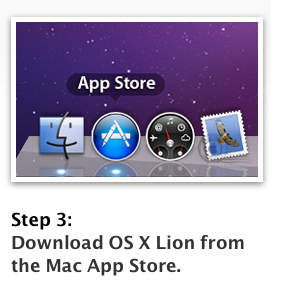
  3. They removed almost all obstacles to buy it. All you need to do is click on the mac app store icon and bam! you got it.
  4. Lion has a few network effect features. For example the “Air Drop” – allows you to easily share files with people near you. People will do the upgrade as soon as one of their co-workers asks them to… no need to wait for a CD in the mail.
  5. Quicker market adoption. (the result of benefit #1, #2, and #3)

What I learned from Apple today:

  1. Make it as easy as possible to give customers your products: 1 click and as little as waiting time as possible.
  2. Make it extremely affordable so people don’t even want to cheat your system. It’s just easier to buy it and not worth the hassle.
  3. Understand where you make most of your money.

Special thanks to Ish for helping me write up this post.